29 octobre 2026
Joining forces to offer a new breast cancer detection technique
Press releases
The CHUS Foundation and the Quebec Cancer Foundation have joined forces to ensure women have access to a unique breast cancer detection technique, right here in Sherbrooke.
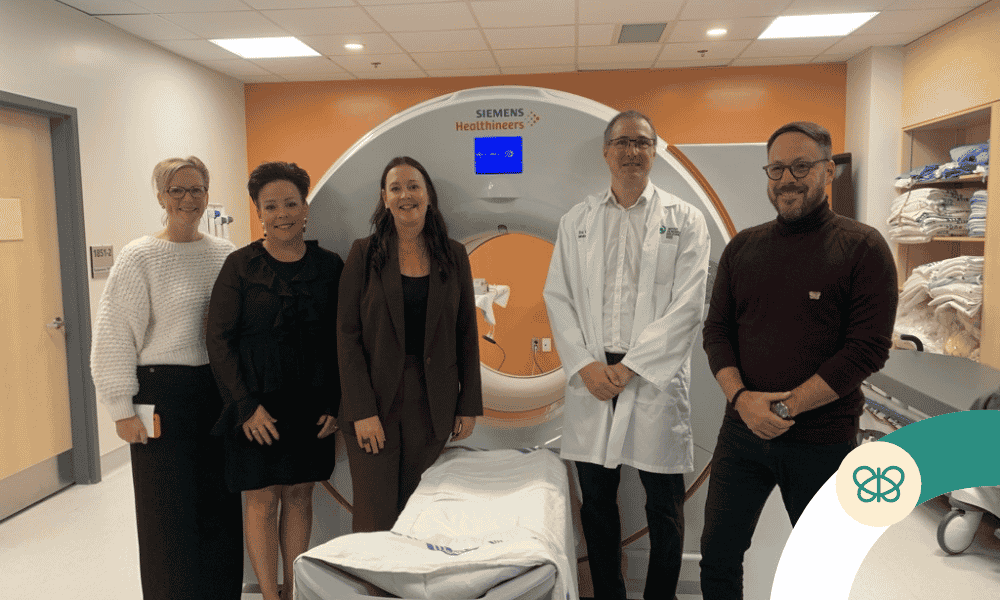
The goal of this initial collaboration is very concrete: to offer hundreds of women a new imaging method that is more precise than standard techniques.
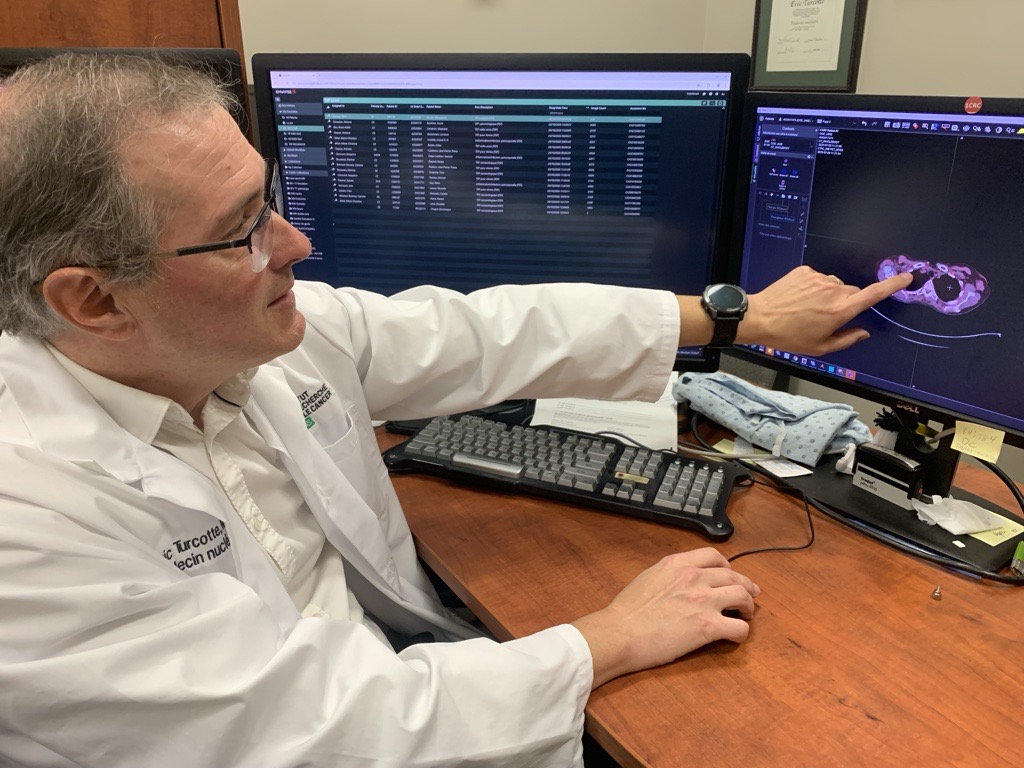
PET imaging using 4F-MFES, a tracer produced by cyclotron in Sherbrooke, has been the subject of clinical research for over 12 years by the team led by Dr. Éric Turcotte, a clinician-researcher at the CHUS Research Centre (CRCHUS) and a professor-researcher at the Université de Sherbrooke’s Institute for Research on Cancer (IRCUS).
"This innovation is a testament to our region’s exceptional expertise in medical imaging and isotope production. As women’s health is one of our priorities, we are confident that this new diagnostic approach will help transform the care provided to them and improve their quality of life," says Martin Clermont, Director General of the Fondation du CHUS.
This exam is currently not covered by the public health plan, but thanks to a joint $50,000 contribution from the two foundations, patients will now be able to access it. "We are proud to support initiatives that aim to better assist people living with cancer in Quebec by improving the trajectory of care and services they receive in oncology. This is the very purpose of our financial support program in oncology," adds Sandra Asselin, Director of the Estrie Regional Centre - Maison Parallèle of the Quebec Cancer Foundation.
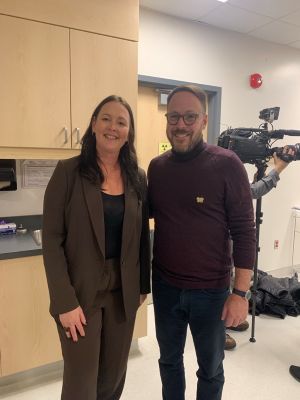
4F-MFES PET imaging detects estrogen receptor-positive breast cancers with unparalleled sensitivity. Dr. Éric Turcotte, also a nuclear medicine specialist at the CHUS, expressed his gratitude to both foundations. "This funding will allow breast cancer patients from across Quebec to access this type of medical imaging. This technology, available only at the Centre hospitalier universitaire de Sherbrooke, provides a more precise assessment of the extent of the disease, allows for better characterization of indeterminate lesions, and detects certain types of breast cancer that are difficult to see with conventional imaging methods. This information can have a major impact on treatment decisions and help provide care that is better tailored to each patient," explains Dr. Turcotte.
The synergy between the various partners, including the CRCHUS and the IRCUS, creates an environment conducive to breakthroughs that transform care.
"The IRCUS provides concrete support to researchers at every stage of their projects, among other things, by creating networks that foster exchange and collaboration. At the heart of this announcement, the IRCUS played a leading role in bringing the parties together and contributing to the realization of this project for the benefit of people affected by cancer," concludes Prof. Brigitte Guérin, professor-researcher and member of the IRCUS executive committee.
Thank you for giving for health!
Your involvement makes all the difference in achieving and pursuing the mission of the CHUS Foundation.

Autres nouvelles
Voir toutes les nouvelles
Press releases
Two benefit evenings, The Chemise blanche and The Petite robe noire, bring members of the community together to support the CHUS Foundation in an elegant and festive atmosphere.

Press releases
Cette année encore, des milliers de personnes ont participé au Grand tirage de la santé | Groupe Beaucage dans l'espoir de remporter le gros lot de 150 000 $ ou l’un des 10 autres grands prix offerts lors de cette populaire loterie qui en est à sa 27e édition.

Press releases
Malgré une météo peu clémente, la 28e édition du Tournoi de golf | Banque Nationale Gestion privée 1859 a rassemblé des centaines de personnes engagées envers la santé de notre région. Grâce à cette mobilisation, un montant net de 1 206 983 $ a été amassé pour soutenir des projets majeurs.