October 12, 2026
Half a century of better understanding rheumatic diseases to transform lives
Recognition
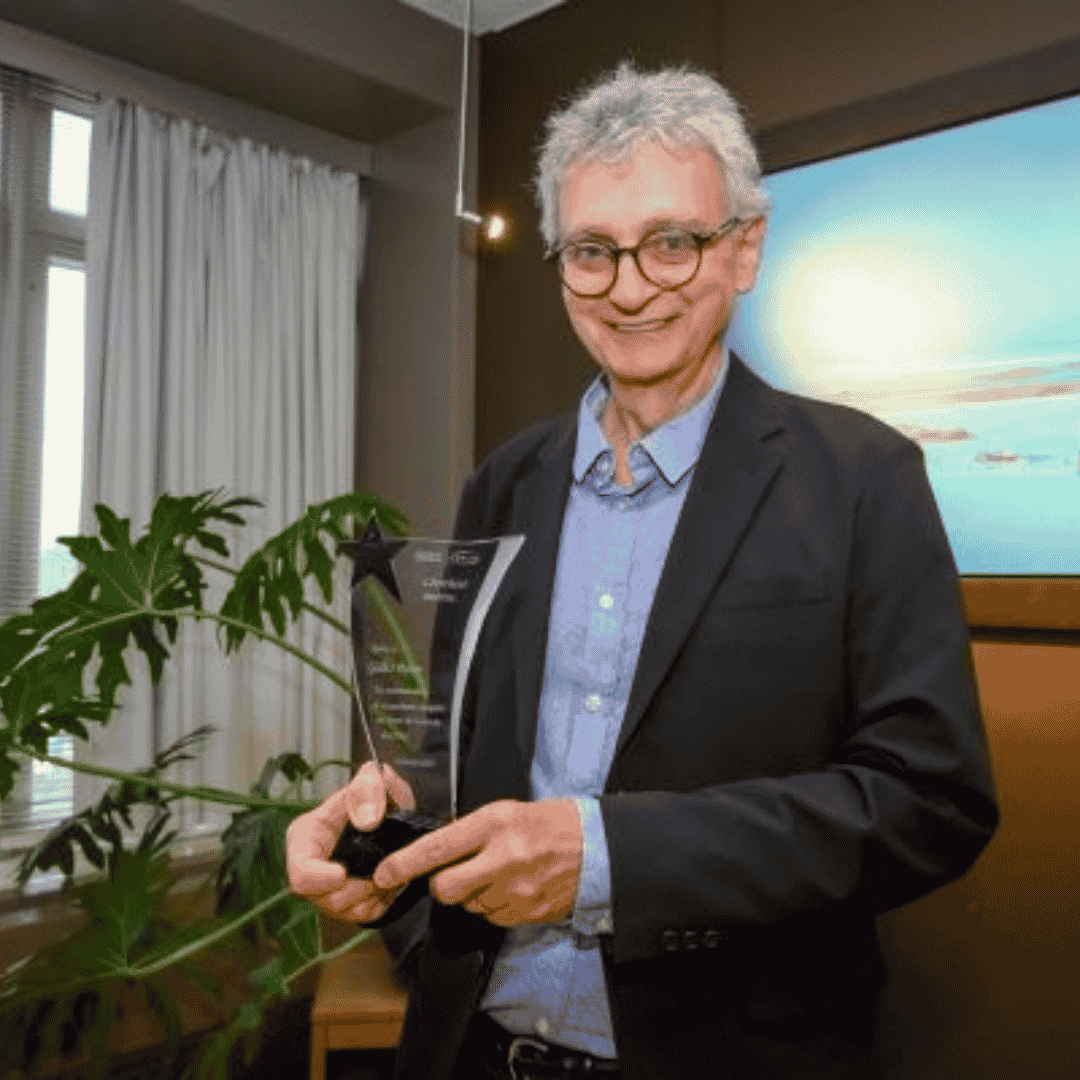
Although its impacts are often severe and even debilitating, arthritis remains widely misunderstood. Fortunately, research is helping to improve the quality of life and future outlook for those living with the condition. Thanks to researchers like Dr. Gilles Boire and the support of our donors, knowledge is advancing, paving the way for increasingly personalized treatments.

In Canada, one in five people lives with arthritis, one of the most common chronic diseases. Often trivialized, the various forms of arthritis can lead to serious consequences: significant pain, joint deformities, loss of mobility, neurological complications, disability, and even premature death when not managed properly.
The many forms of inflammatory arthritis affect more than 5% of adults, while more than one in 1,000 children is affected by juvenile chronic arthritis. It is against this backdrop that Dr. Gilles Boire has dedicated his career to research and care in rheumatology.
A vocation born from the desire to help
Entering medical school at the Université de Sherbrooke in 1977, Dr. Gilles Boire quickly turned toward rheumatology, a field that has fascinated him for nearly half a century.
"I saw people suffering and being severely disabled by rheumatological diseases. Many of them were young women who, for the most part, did not have unhealthy lifestyles. The medications we had at the time were essentially limited to aspirin, cortisone, anti-inflammatories, and other treatments that caused many side effects. So, I told myself that this was a field of medicine where there was still a huge amount to discover and where I felt I could contribute," explains the doctor, who is also an associate professor in the Department of Medicine at the Université de Sherbrooke.
Few careers are built entirely within the same community, but that is the choice Dr. Boire made. With the exception of a two-year postdoctoral fellowship at Yale University and a few professional development stays, he has dedicated nearly 50 years of his professional life to advancing care, research, and training in our region.
Breakthroughs that change lives
While therapeutic options for patients were limited and the aftereffects often significant in the 1980s, the reality is quite different today. New therapies now make it possible to better control inflammation, slow the progression of the disease, and significantly improve the quality of life for those affected. While people with severe forms of rheumatoid arthritis once had a life expectancy reduced by five years for women and ten years for men compared to the rest of the population, this gap is now tending to disappear.
However, this good news does not mean the work is finished. On the contrary. Despite the progress made, many questions remain unanswered, particularly regarding the causes of rheumatological diseases. Factors associated with their development include genetics, certain lifestyle habits such as smoking, hormonal changes like menopause in women, and a large element of chance. "If we knew the trigger for these conditions, we could prevent them, or even stop them from developing," emphasizes Dr. Boire.
The biobank: a driver of discovery
To deepen knowledge and answer the many remaining questions, research teams rely on the rheumatology biobank at the CHUS Research Centre. This unique resource, under the direction of Dr. Gilles Boire, supports the work of a team of eleven rheumatologists and several assistants, graduate students, and rheumatology residents.
To date, the biobank contains medical imaging data, biological samples (serum, DNA, etc.), and clinical information from 1,212 participants.
"This precious resource also opens the door to a more precise evaluation of treatment effectiveness. Since medications do not work the same way for every individual and the progression of the disease varies from one person to another, we are seeking to better understand each person's specific characteristics in order to better tailor treatments to their profile."
Research also progresses through collaboration. The Sherbrooke team regularly works with other research centres, both in Quebec and elsewhere in the world, notably by sharing samples, scientific publications, and conferences. In the coming years, it also hopes to expand its biobank and obtain the necessary certifications to make it a reference in Canada and internationally.
Fonds Huguette et Paul Boire : a lasting commitment to rheumatology research
Scientific breakthroughs do not happen overnight: they rely on years of work, data collection, and collaboration, but also on sustainable financial support. The Huguette and Paul Boire Fund was created to provide long-term support for rheumatology research. This fund aims to develop world-class resources here in Sherbrooke, making it possible to advance research and ultimately improve care for those affected through a better understanding of the causes and mechanisms of joint diseases, their progression, and the effectiveness of treatments.
Thank you for giving for health!
Your involvement makes all the difference in achieving and pursuing the mission of the CHUS Foundation.

Autres nouvelles
Voir toutes les nouvelles
Recognition
In the heart of Volunteer Action Week, the CHUS Foundation held its Recognition Gala on Wednesday evening, to thank and highlight the involvement of a few hundred people who allowed it to accomplish its mission over the past year.

Recognition
On Thursday, April 28, in the heart of Volunteer Action Week, the CHUS Foundation held its Gala reconnaissance to highlight the volunteer involvement of a few hundred people who allowed it to accomplish its mission over the past year.